


Joann Gatewood, native North Dakotan and retired Air Force nurse, is no stranger to hard work. When circulation issues — specifically peripheral arterial disease (PAD) — began slowing her down, she knew it was time to act. With the help of a specialized exercise therapy program through Jamestown Regional Medical Center (JRMC) Cardiac Rehab and a dedicated care team, Joann has experienced meaningful and lasting improvement.
In mid-2025, Joann began developing open wounds on her lower legs and feet — a common but serious complication of PAD, which restricts blood flow to the extremities. As her symptoms progressed, her primary provider recommended she explore treatment options that could address the underlying circulation issues.
“I know from experience that if you don’t keep moving, you can lose your mobility,” Joann said. “I’ve seen it happen to my friends, and I don’t want that for myself.”
Through the work of her local care team, including physician assistant Brady Anderson, Joann connected with a non-surgical approach to help improve circulation: Supervised Exercise Therapy for Peripheral Arterial Disease (SET PAD), offered through JRMC Cardiac Rehab.
“I went in blind — I didn’t know what to expect when I was referred,” Joann recalls. “But I was willing to try it because Brady said it was a good program, and I trust him. My main hope was to be able to move around better without so much pain.”
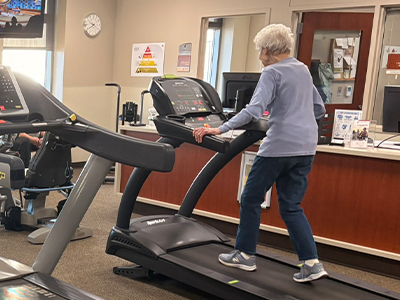
The improvements came quickly. Within just six weeks, Joann’s stamina and mobility had increased significantly. She progressed from walking in 4-minute bouts at a slow pace and no incline to 15-minute bouts at a faster speed and increased incline. She also reports that improved circulation has reduced the pain in her feet — something that once interfered with her daily activities and sleep.
Joann credits much of her success to the supportive environment in cardiac rehab.
“Being in rehab keeps me motivated,” she said. “If I were doing the exercise on my own, I don’t think I’d push myself the same way.”
PAD affects one in 20 adults over age 50 and one in every five adults over age 70, yet the SET PAD program remains underutilized — especially among women, who are often diagnosed later or overlook early symptoms such as leg pain, fatigue or wounds that won’t heal. Joann hopes her story will raise awareness for others who may be living with these issues without knowing solutions exist.
“We often see patients make remarkable improvements as a result of this program,” said Madeline Ranum, cardiac rehab coordinator at JRMC. “This kind of progress has a meaningful impact on daily life. It can be the difference between barely getting into a grocery store and confidently walking the aisles. Joann’s story is an amazing example of collaboration and the powerful impact of exercise therapy.”
In addition to improving mobility and reducing pain, SET PAD helps lower the risk of future complications from PAD such as heart attack, stroke, nerve damage and tissue breakdown. This program is nonsurgical, evidence-based and designed to help patients regain independence and daily function.
LEARN MORE